How to Dry Out a Room After Water Damage (Fast & Safe)
After years of responding to water damage calls, here’s what I know for certain: the difference between a $2,000 cleanup and a $15,000 restoration almost always comes down to how fast you act in the first 24-48 hours. I have walked into homes where the homeowner waited “just a couple days” to deal with a flooded room, and what could have been a straightforward dry-out turned into a full mold remediation job. It breaks my heart every time, because most of that damage was completely preventable.
Follow our emergency water damage checklist for the first 24 hours to stay organized. Speed matters enormously — every hour of unaddressed moisture increases mold risk, structural damage, and repair costs. This guide provides the same actionable steps I follow on every job to dry out a room quickly and safely after water damage, plus honest guidance on when to hire professionals.
Key Takeaway: Start water extraction and air movement within the first hour if possible. Mold begins growing in 24-48 hours, and every hour you wait makes the job harder, more expensive, and more likely to require professional intervention.
Why Speed Matters: The Mold Growth Timeline
Mold can begin growing in as little as 24-48 hours in wet materials at room temperature. Once established, mold becomes exponentially harder and more expensive to remediate. Our mold prevention guide after water damage covers specific steps to stop mold before it starts.
Day 1-2: Mold spores begin germinating in wet materials. At this stage, thorough drying can still prevent mold growth entirely.
Day 3-5: Mold colonies become visible to the naked eye. Remediation becomes more complex and usually requires professional help.
Day 7+: Mold spreads throughout materials, can become airborne, and poses serious health risks. Structural materials may require replacement rather than drying.
Beyond the mold concern, wet materials deteriorate structurally. Drywall softens, wood swells and warps, and insulation loses its effectiveness. The longer materials stay wet, the greater the permanent damage.
Safety First: Electrical and Contamination Hazards
Electrical hazards are the most immediate danger. Water conducts electricity, creating electrocution and fire risks.
Shut off electricity to the affected area at the circuit breaker immediately. If the main breaker is in water, do not touch it—call an electrician or the utility company for safe shutdown.
Do not use electrical equipment in wet areas until the space is completely dry and an electrician has inspected for damage. This includes floor lamps, ceiling fans, outlets, and light fixtures.
Avoid contact with contaminated water from flooding, sewage backup, or unknown sources. Contaminated water causes serious illness. If flood water is present, wear waterproof gloves, boots, and protective clothing. Do not allow children or pets in the area until it’s thoroughly cleaned and dried.
Never enter flooded basements alone. Water may hide debris, electrical hazards, or structural damage. Have a helper present and be prepared to evacuate if conditions worsen.
Water Extraction: First Crucial Step
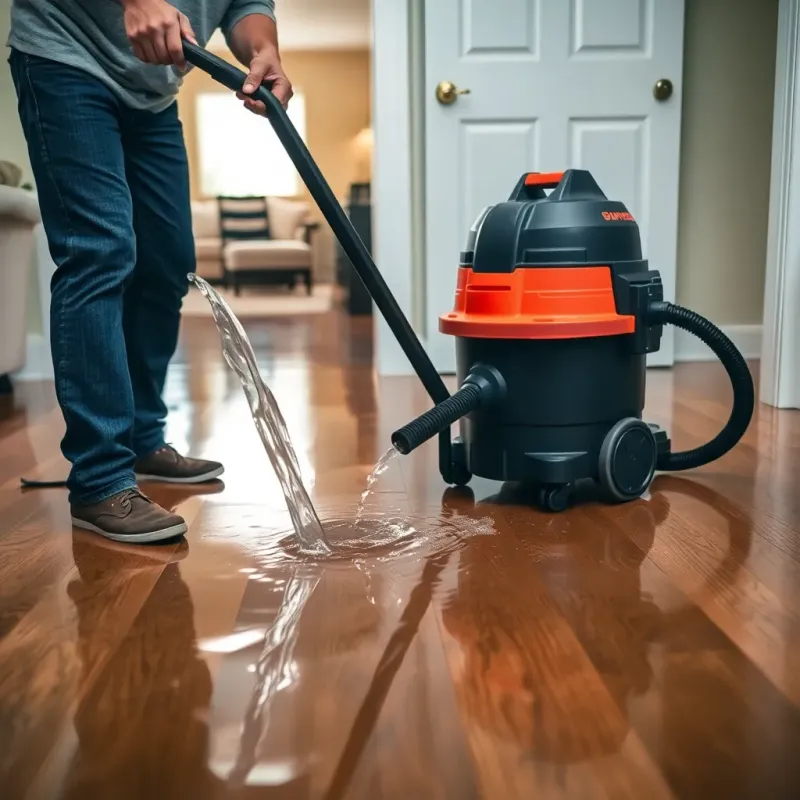
Manual Removal (Small Amounts)
For minor water (puddles, shallow standing water), use mops, towels, and buckets to remove water manually. Wring towels thoroughly and repeat until no more water can be absorbed.
Pump Extraction (Moderate to Heavy Water)
For significant standing water (several inches), renting a submersible pump is essential. Position the pump intake in the deepest water area and run discharge hose to a floor drain, basement window, or outdoor area.
Pumps typically move 2,000-4,000 gallons per hour. A room with 4 inches of water across 200 square feet contains roughly 2,500 gallons—taking 30-45 minutes to extract.
Do not discharge water onto neighboring properties without permission. Direct water to storm drains or designated drainage areas.
Wet Vacuum Extraction (Best for Final Water)
After bulk water removal, wet vacuums remove remaining surface water and moisture from carpets, subfloors, and hard floors. Professional-grade wet vacuums are much more effective than consumer models.
Rent a commercial wet vacuum if you have significant water. These machines extract water, then filter and discharge it safely.
Using Fans, Dehumidifiers, and Heaters
Fans: Maximize Air Circulation
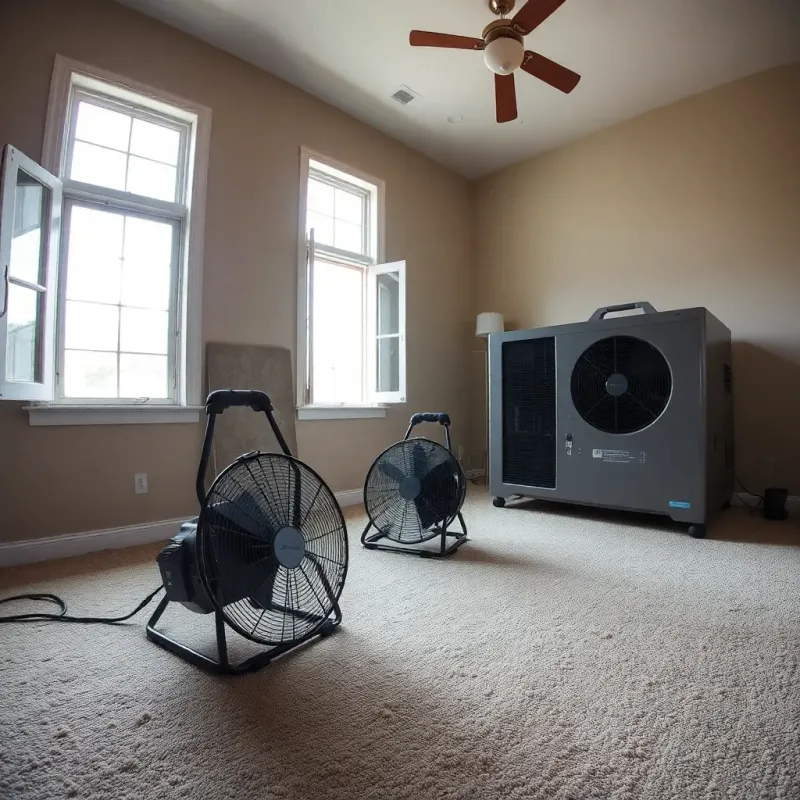
Position fans to create continuous air circulation throughout the room. From my experience, cross-ventilation is the single most effective low-cost drying strategy you can use — fans pulling air from windows and pushing it toward open doors or windows force moisture-laden air out.
Run fans 24 hours daily until complete dryness is achieved. Multiple fans are more effective than one large fan. Position box fans in windows facing outward to create exhaust.
Open windows and doors (unless weather is extremely humid outside) to allow moist air to escape and dry air to enter.
Dehumidifiers: Remove Atmospheric Moisture
Dehumidifiers pull moisture from the air into collection tanks or continuous drain lines. They’re essential for humid climates or when doors/windows cannot be opened.
Capacity matters: A typical dehumidifier removes 30-50 pints of water daily. Larger rooms or extensive water damage may require multiple dehumidifiers or more powerful models.
Position dehumidifiers in the center of the room for optimal air circulation. Empty collection tanks daily or set up continuous drainage to a floor drain or exterior.
Run dehumidifiers continuously until moisture levels drop below 50% relative humidity (measured with a hygrometer or dehumidifier display).
Heaters: Accelerate Evaporation
Heat accelerates water evaporation dramatically. Even a small space heater (1,500 watts) increases drying speed significantly.
Position heaters carefully away from flammable materials (curtains, furniture). Never use propane heaters indoors—they produce carbon monoxide and moisture that worsens the situation.
Electric heaters are safe indoors but run up electricity costs. Use them strategically—heating the air during the day, then opening windows at night if outdoor humidity is lower.
Keep room temperature between 65-75°F and humidity below 50% for optimal drying.
Opening Walls for Hidden Moisture Detection
Water doesn’t always stay visible on surfaces. Moisture often travels behind walls, under flooring, and into wall cavities where you cannot see it. A trick I learned early in my career: always check at least 2 feet beyond where the visible water line stops. Water wicks through drywall and wood far beyond what you can see on the surface. Learn to recognize the signs of hidden water damage in walls before they become major problems.
Check hidden moisture by:
- Using a moisture meter on walls, checking 6-12 inches above and below the visible water line
- Feeling wall surfaces—areas that are cold or clammy contain moisture
- Smelling for musty odors that indicate moisture trapped inside
If moisture readings exceed 20% in wall cavities, the wall needs opening for drying.
To open walls safely:
- Turn off electricity to affected wall sections
- Cut a small horizontal line 6-12 inches above visible water damage with a utility knife
- Remove the drywall section (typically 12 inches wide)
- Position fans and dehumidifiers to direct air into the cavity
- Check drywall behind the opening, insulation, and studs for water/mold
- Monitor moisture levels daily—readings should drop below 20% within 3-5 days
Replace if finding mold: If mold is growing inside wall cavities, that section of wall should be replaced rather than dried.
Checking Moisture Levels: Testing and Monitoring
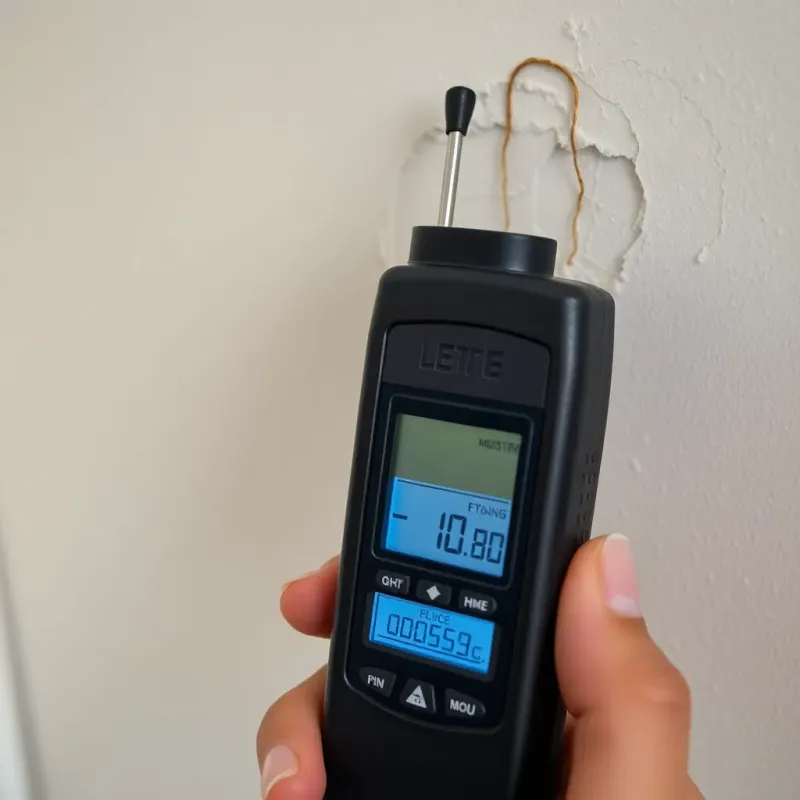
Moisture Meters
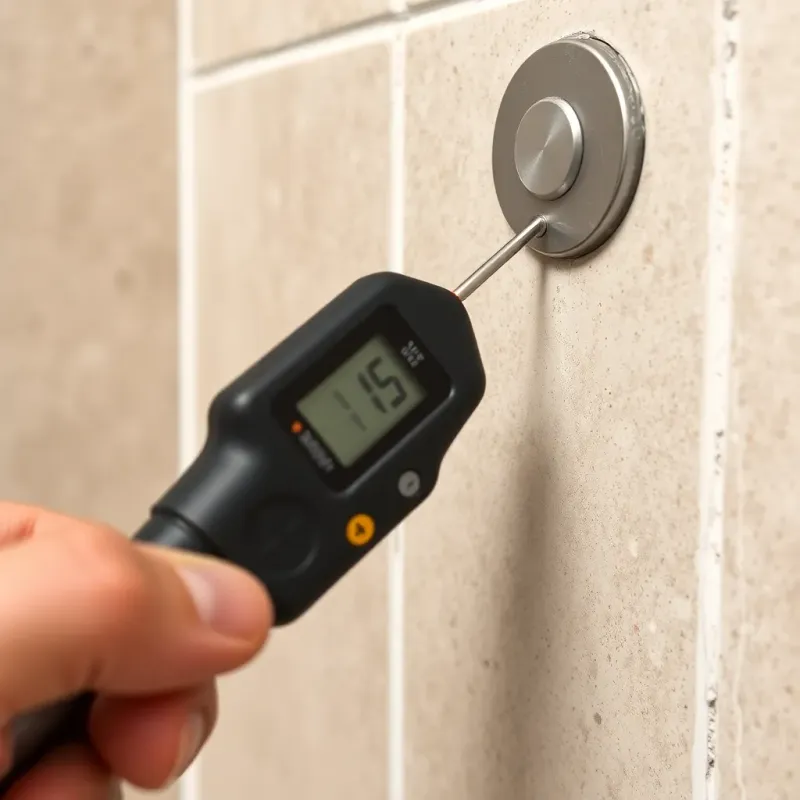
Moisture meters measure water content in materials, helping you determine if drying is complete. Target readings:
- Drywall: Under 12%
- Wood: Under 15%
- Concrete/masonry: Under 3-4%
Take readings daily in multiple locations to track progress. Readings should show consistent downward trends. Here’s what I always recommend to clients: keep a simple log with dates, locations, and readings. This not only helps you track drying progress, but it is invaluable documentation if you file an insurance claim later.
Hygrometers
Hygrometers measure relative humidity in the air. Target humidity levels:
- Below 50% relative humidity: Acceptable
- 30-50%: Ideal for drying
- Above 60%: Mold risk increases significantly
Position hygrometers in multiple rooms to monitor overall humidity trends. If humidity stays above 50% despite running dehumidifiers, open windows more or run additional dehumidifiers.
Visual Inspection
Beyond meters, look for:
- Soft or spongy materials
- Visible mold (black, green, or white spots)
- Musty odors
- Cold spots indicating retained moisture
- Discoloration that hasn’t faded despite drying efforts
Comparing Drying Equipment: What Works Best
Not all drying equipment is created equal. Here is a comparison of the most common options so you can pick the right tools for your situation:
| Equipment Type | Moisture Removal | Best For | Approximate Cost | Noise Level |
|---|---|---|---|---|
| Box Fan | Low (air circulation only) | Supplemental drying, small spills | $15-$40 to buy | Low |
| Consumer Dehumidifier | 30-50 pints/day | Single rooms, minor moisture | $200-$400 to buy | Moderate |
| Refrigerant Dehumidifier (Commercial) | 100-200 pints/day | Moderate water damage, warm environments | $50-$80/day rental | Moderate-High |
| Desiccant Dehumidifier (Commercial) | 150-300 pints/day | Large jobs, cold environments, deep drying | $75-$120/day rental | High |
| Industrial Air Mover | High (accelerates evaporation) | Used alongside dehumidifiers for fast drying | $30-$50/day rental | High |
| Subfloor Drying System | Targeted (under flooring) | Water trapped under hardwood or tile | Professional only | Moderate |
Professional Drying Equipment and Services
Professional water damage companies use industrial-grade equipment far superior to consumer options.
Desiccant Dehumidifiers
These machines dry air more aggressively than refrigerant dehumidifiers, achieving humidity levels as low as 20-30% even in cold conditions. Ideal for thorough drying.
Professional-Grade Air Movers
Industrial air movers move significantly more air than box fans, creating powerful circulation patterns that dry materials from the inside out.
Thermal Imaging
Thermal cameras detect hidden moisture by showing temperature variations. Wet materials appear cooler than dry ones, revealing moisture trapped inside walls, ceilings, and under flooring.
Subfloor Drying Systems
For water under flooring, professionals use specialized equipment to inject hot, dry air under flooring from the edges, drying subfloors from underneath.
Professional Services vs. Rental
Hiring professionals cost $1,500-$5,000+ for extensive water damage but includes expertise, guarantee of complete drying, mold prevention knowledge, and documentation for insurance claims. See our full water damage restoration cost breakdown to understand what’s included.
Renting equipment costs $30-$100 daily per piece. For week-long drying projects, rentals may cost $300-$500 versus professional service at $2,000+, making professional service increasingly attractive for large jobs.
Drying Timeline and Expectations by Damage Class
Class 1 (Minimal Damage)
- Affected area: Small, localized water (under 100 sq ft)
- Drying time: 24-48 hours with fans and dehumidifiers
- Expected outcome: Full recovery, minimal professional help needed
Class 2 (Moderate Damage)
- Affected area: Water throughout room with some absorption into materials (100-500 sq ft)
- Drying time: 5-7 days of continuous drying
- Expected outcome: Recovery likely; some materials may need replacement
Class 3 (Significant Damage)
- Affected area: Water damage throughout multiple rooms, materials saturated (over 500 sq ft)
- Drying time: 2-4 weeks of professional-grade drying
- Expected outcome: Extensive repairs needed; professional equipment essential
Class 4 (Severe Damage)
- Affected area: Deep structural saturation in dense materials (wood, concrete)
- Drying time: 4-6+ weeks
- Expected outcome: Significant material replacement; extensive professional remediation required
Times are estimates—actual drying depends on humidity, temperature, water source (clean vs. contaminated), and materials affected.
Materials That Can vs. Cannot Be Saved
Can Usually Be Saved (If Dried Quickly):
- Solid wood furniture: Can be preserved if dried within 48 hours
- Books and papers: Air-dry by standing upright with pages slightly spread
- Carpets: Can survive if dried within 24-48 hours; longer waiting requires replacement
- Drywall: Can be saved if moisture is below 20% and no mold is present
- Subfloors: Can be saved if dried quickly; hardwood may need refinishing
Should Be Replaced:
- Insulation: Loses effectiveness when wet; replaced insulation prevents mold
- Carpet: If wet for more than 48 hours, replacement is recommended
- Particleboard/MDF: Absorbs water and swells permanently
- Mattresses and pillows: Cannot be reliably sanitized after water damage
- Drywall: If water is from contaminated sources or mold is present
- Flooring: Laminate swells permanently; vinyl may trap moisture underneath
Uncertain Cases Requiring Assessment:
- Hardwood flooring: May be salvageable with professional drying and refinishing ($2-$8 per sq ft)
- Upholstered furniture: Depends on type and water source; professional cleaning may save it
- Cabinets: Solid wood may be saved; particle board must be replaced
- Wallpaper: Usually needs replacement after water damage
Document all items before discarding for insurance claims. Take photos of damaged materials with clear identification.
When to Call Professionals
Call professionals immediately if:
- Water damage covers more than 500 square feet
- Water is from contaminated sources (sewage, ground flooding)
- Structural damage is visible or suspected
- Mold is present or strongly suspected
- Drywall or other materials are saturated
- You lack time for 24/7 monitoring of drying
- Humidity won’t drop below 50% after 48 hours of active drying
Professional services include:
- Rapid water extraction with industrial equipment
- Comprehensive moisture mapping to identify hidden water
- Mold prevention and remediation
- Documentation and communication with insurance companies
- Guarantee of complete drying (usually 10-14 days)
The earlier you hire professionals, the lower overall remediation costs tend to be.
Quick Reference: Water Damage Cleanup Timeline
Hour 0-1
- Shut off electrical power to affected area
- Remove standing water with pumps or wet vacuums
- Stop water source (shut off burst pipes, tarps for roof leaks)
Hours 1-4
- Remove heavily saturated materials (wet insulation, soaked carpet)
- Open walls if moisture has penetrated cavities
- Move furniture and belongings to dry areas
Hours 4-24
- Position fans for maximum air circulation
- Set up dehumidifiers
- Check for visible mold
- Begin moisture meter monitoring
- Contact insurance company
Days 2-7
- Run equipment 24/7
- Monitor moisture levels daily
- Open affected materials to air
- Clean and disinfect surfaces
- Assess need for professional services
Days 7+
- Continue drying until moisture levels are normal
- Address visible mold or musty odors
- Begin repairs and material replacement
- Document all expenses for insurance
FAQ: Common Questions About Drying After Water Damage
Q: How long can materials stay wet before mold definitely grows? A: Mold can begin growing in 24-48 hours, but it’s not inevitable if drying is aggressive. The key is moisture + time + darkness + moderate temperature. Active drying with fans and dehumidifiers started immediately dramatically reduces mold risk even after 48 hours.
Q: Should I throw away all wet belongings? A: No. Items that dry completely within 48 hours can usually be saved. Hard items (solid wood, plastic, metal) survive water damage better than soft goods. Books, clothing, and papers can be air-dried. Prioritize items with sentimental or financial value for drying efforts.
Q: Is it safe to stay in a home during water damage cleanup? A: Small water damage with no contamination or mold is usually safe. Avoid the affected area while drying is underway. Significant water damage or contamination requires evacuation. If you experience respiratory symptoms, leave immediately and call for professional assessment.
Q: How often should I check moisture levels? A: Check daily for the first week, then every 2-3 days until levels stabilize below 50% humidity and moisture meter readings are normal. Document readings to show insurance companies progress.
Q: Can I speed up drying by heating the room to high temperatures? A: Heat accelerates evaporation, but extreme heat (above 80°F) can damage materials and is uncomfortable to maintain 24/7. Moderate heat (70-75°F) combined with fans and dehumidifiers is most effective and sustainable.
Disclaimer: This article is for informational purposes only and does not constitute professional advice. Every water damage situation is unique. Always consult a licensed contractor or restoration professional for your specific situation. If you’re dealing with an emergency, contact your local restoration company immediately.