Does Renters Insurance Cover Water Damage? Complete Guide
When renters call me about water damage, the first question is always the same: “Isn’t this my landlord’s problem?” I wish it were that simple. I worked with a young couple in their first apartment last year — a pipe burst in the unit above them and soaked everything they owned. Their furniture, their electronics, their clothes — all ruined. They assumed the landlord’s insurance would cover it. It didn’t. They had no renters insurance, and they were out nearly $8,000 in personal belongings. That’s money most renters don’t have sitting around. It’s a conversation I’ve had too many times, and it never gets easier.
To compare renters coverage to homeowners policies, it helps to understand the nuances of what’s covered. In this guide, I’ll explain exactly what renters insurance does and doesn’t cover for water damage, clarify the confusing line between tenant and landlord responsibility, and walk you through how to file a successful claim if you ever need to.
Key Takeaway: Your landlord’s insurance covers the building, not your belongings. If water damage destroys your personal property, only your own renters insurance policy will pay to replace it — and at $10 to $30 per month, it’s one of the cheapest forms of financial protection you can buy.
What Renters Insurance Covers: The Basics
Renters insurance is designed to protect your personal property—the items you own—from specific covered perils. It typically includes three main components:
Personal Property Coverage
This is the primary component protecting your belongings from covered damages including:
Water damage from covered sources:
- Pipe bursts within the apartment
- Sudden leaks from appliances (washing machines, dishwashers, water heaters)
- Sudden plumbing failures
- Ice dam damage to personal property
- Sudden rupture of water supply lines
- Overflowing bathtubs or toilets (if from sudden accident, not maintenance failure)
Other covered perils:
- Fire and smoke damage
- Theft and vandalism
- Wind and hail damage
- Falling objects
- Lightning damage
- Explosion and electrical damage
The exact perils covered depend on your policy type (see below), but water from sudden, accidental sources is typically included.
Liability Coverage
Protects you if you’re found responsible for injuring someone or damaging someone else’s property:
- Someone slips in water you inadvertently leaked into common areas
- Your burst pipe damages your downstairs neighbor’s apartment
- Your overflowing toilet floods the unit below
- Your negligence caused injuries requiring medical care
Liability coverage limits are typically $100,000 to $300,000 and cover legal defense costs plus settlement amounts.
Additional Living Expenses (ALE)
If your apartment becomes uninhabitable due to a covered water damage incident:
- Hotel costs while apartment is repaired
- Restaurant meals if you can’t cook
- Temporary storage for belongings
- Other reasonable expenses to maintain your normal living standard
Coverage limits are typically $20,000-$30,000, with a daily limit around $100-$150.
What Renters Insurance Does NOT Cover: Critical Exclusions
Understanding exclusions is as important as understanding coverage. Most renters policies specifically exclude:
Water Damage from Excluded Sources
Flood damage
- Water from outside the apartment (external flooding)
- Overflow from bodies of water
- Groundwater seepage
- Water backup from municipal sewers or drains
- Requires separate flood insurance
Gradual water damage
- Slow leaks from poorly maintained pipes
- Seepage from inadequate waterproofing
- Condensation damage
- Continuous or repeated seepage
Maintenance-related damage
- Damage from known plumbing issues
- Water damage from deferred repairs
- Failure due to aging or wear
- Damage from lack of maintenance
Landlord Responsibility Issues
Structural water damage
- Damage from roof leaks (landlord responsibility)
- Foundation leaks (landlord responsibility)
- Damage from building exterior failures
- Damage from common area plumbing
Landlord negligence
- Damage resulting from landlord’s failure to maintain property
- Damage from landlord’s incomplete repairs
- Damage from code violations the landlord ignored
Specific Exclusions by Policy Type
Basic form (HO-4)
- More limited coverage, fewer perils covered
- May exclude water damage from certain sources
- May require specific endorsements for water coverage
Broad form
- More comprehensive coverage
- Typically includes water damage from more sources
- Usually more affordable
Special or comprehensive form
- Most extensive coverage
- Covers most water damage except explicitly excluded sources
- Higher premiums but better protection
What’s Covered vs. What’s Not: Quick Reference Table
I put this table together because I got tired of explaining the same thing over and over. Clip it, screenshot it, stick it on your fridge — it’ll save you a headache when something goes wrong.
| Water Damage Scenario | Covered by Renters Insurance? | Who Else Might Pay? | What to Do First |
|---|---|---|---|
| Burst pipe in your unit | Yes (personal property) | Landlord covers structural repair | Stop the water, document, call insurer |
| Washing machine leak (sudden) | Yes | Landlord covers flooring/walls | Photograph everything before cleanup |
| Neighbor’s pipe floods your unit | Yes (your property) | Neighbor’s liability insurance | Notify landlord + your insurer same day |
| Roof leak damages your belongings | Maybe (file with your insurer as backup) | Landlord’s insurance is primary | Document and notify landlord in writing |
| External flooding (storm, river) | No | Requires separate flood insurance (NFIP) | File with flood insurer if you have it |
| Slow/gradual leak | No (maintenance exclusion) | Landlord if they failed to fix known issue | Document the timeline, consult landlord |
| Sewer backup | No (unless you have endorsement) | Landlord may be liable depending on cause | Check your policy for sewer backup rider |
| Toilet overflow (accidental) | Yes | Landlord covers structure | Shut off water, document, notify both parties |
| Toilet overflow (negligence/known clog) | Likely no | You may be personally liable | Consult your policy language carefully |
| Condensation/humidity damage | No | Landlord if ventilation is inadequate | Report to landlord in writing |
Three Types of Renters Insurance Policies
Understanding policy types helps you choose appropriate coverage:
Actual Cash Value (ACV) Policies
How it works:
- Insurer pays depreciated value of damaged items
- Replacement cost minus depreciation
- Lower premiums
Example:
- You bought a laptop 3 years ago for $1,200
- Current replacement cost is $1,500
- Depreciation is 40% (3 years old)
- Insurance pays: $1,500 - (40% depreciation) = $900
Best for:
- Budget-conscious renters
- Those with older belongings
- Renters accepting lower payouts for lower premiums
Replacement Cost Policies
How it works:
- Insurer pays cost to replace item with new equivalent
- No depreciation deducted
- Higher premiums (typically 10-20% more)
Example:
- Same laptop scenario
- Insurance pays: $1,500 (new replacement cost)
- You receive $600 more than with ACV
Best for:
- Renters with newer, valuable belongings
- Those wanting full replacement value
- Those who can afford higher premiums
Personal tip: I always recommend replacement cost policies to renters, even if the premium is a bit higher. I’ve seen too many people get a check for $400 on a laptop they need $1,200 to replace because the ACV policy depreciated it into the ground. For the extra $3 to $5 a month, it’s a no-brainer.
Agreed Value Policies
How it works:
- You and insurer agree on item value before claim
- Insurer pays agreed amount regardless of depreciation
- Premium varies based on agreed value
Best for:
- High-value items (jewelry, electronics, artwork)
- Items with sentimental value
- Collectibles or specialized equipment
Tenant vs. Landlord Responsibility: Who Pays for What?
This is where confusion often arises. Understanding responsibility depends on the damage source and your jurisdiction’s tenant laws.
Damage from Your Unit’s Plumbing (Your Responsibility)
When damage originates from plumbing within your apartment:
You pay for:
- Damage to your personal belongings (covered by your renters insurance)
- Liability if your water damages neighbor’s property (covered by renters liability)
Landlord pays for:
- Repairs to plumbing within your unit
- Repairs to apartment structure (walls, floors)
- Repairs to landlord’s property
Your renters insurance covers:
- Your personal belongings damaged by the leak
- Your liability if damage extends to neighbors
- Additional living expenses if uninhabitable
Damage from Building Structure (Landlord Responsibility)
When damage originates from the building itself:
Landlord pays for:
- All structural repairs
- Common area damage (hallways, exterior)
- Your personal property damage (they’re liable)
Your renters insurance:
- Provides backup if landlord is uninsured/underinsured
- Covers items landlord’s insurance doesn’t
- Provides liability protection if you’re partially at fault
Damage from Neighbor’s Unit (Shared Responsibility)
Understanding liability for water damage caused by neighbors is essential when damage originates in an adjacent unit:
Your coverage:
- Your renters insurance covers your personal property
- Neighbor’s renters insurance covers their property
- Their liability insurance covers your damage
Claim process:
- Report to your landlord and your insurance company
- Document all damage thoroughly
- File claim with your renters insurance
- Your insurer may pursue subrogation against neighbor’s insurer
Tenant vs. Landlord Insurance: Coordinating Claims
When water damage occurs, both you and your landlord may have insurance claims. Understanding how these coordinate is essential:
Your Renters Insurance Claim
Covers:
- Your personal belongings
- Your liability (if you caused damage to others)
- Additional living expenses if displaced
Doesn’t cover:
- Building structure
- Building systems
- Landlord’s property
Landlord’s Property Insurance Claim
Covers:
- Building structure damage
- Fixtures and built-in appliances
- Common area damage
- Landlord’s liability
Doesn’t cover:
- Your personal property (unless specifically included)
- Tenant negligence (covered by your liability)
Potential Overlaps and Disputes
Building-owned appliances
- Is the refrigerator, stove, water heater yours or landlord’s?
- Your policy covers your belongings; landlord’s covers theirs
- Clarify in your lease which items you own vs. landlord provides
Flooring and carpeting
- Landlord owns flooring; you own personal items on it
- Both insurances may coordinate coverage
- Your policy may not cover flooring but landlord’s will
Personal property in storage areas
- Items in leased storage spaces
- Items in common storage areas
- Coverage depends on policy terms and storage location
How to File a Water Damage Claim as a Renter
Immediate Steps (Same Day)
- Stop water source if safely possible
- Notify landlord immediately (in writing via email or certified mail)
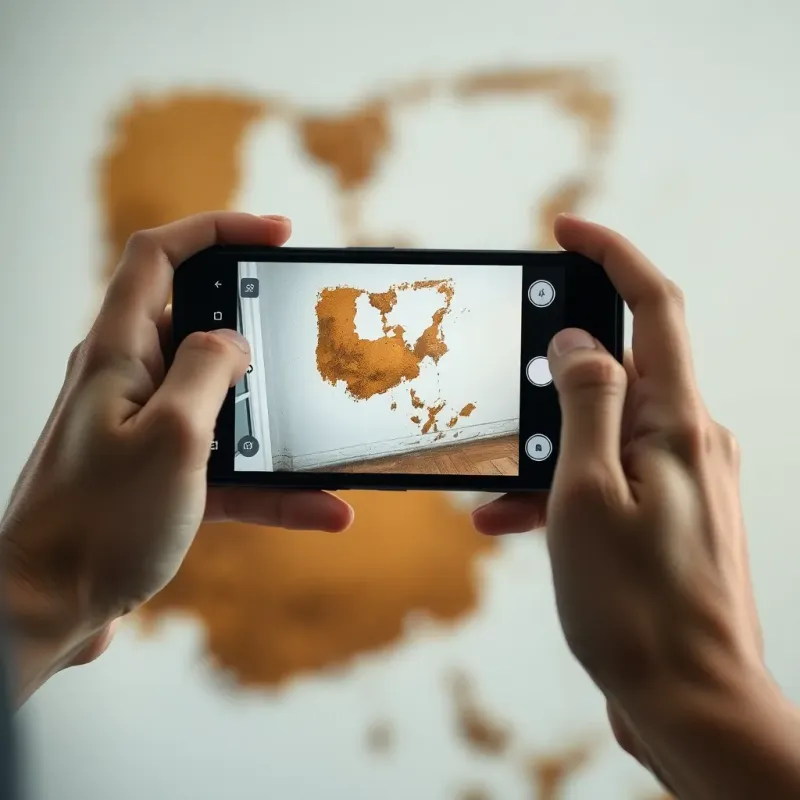
- Document all damage with photos and video from multiple angles
- Contact your renters insurance company and provide claim number
- List all damaged items with descriptions and original purchase prices
- Save all receipts and documentation — be sure to properly document damage for your renters claim
Documentation Phase (Days 1-3)
-
Photograph damage comprehensively
- Each affected item
- Damage extent from multiple angles
- Surrounding context
- Date stamp photos if possible
-
Create detailed inventory
- Item description
- Category (electronics, furniture, clothing)
- Original purchase price
- Original purchase date
- Condition before damage
- Estimated replacement cost
-
Gather supporting documentation
- Original receipts if available
- Credit card statements showing purchases
- Product manuals or serial numbers
- Before damage photos if you have them
- Proof of value (appraisals, insurance riders)
Claims Submission (Days 4-7)
- Complete your insurer’s claim form with all requested information — follow the same process used to file a renters insurance claim for water damage
- Submit documentation in organized format
- Include cover letter referencing claim number and incident date
- Provide your contact information and preferred communication method
- Submit via certified mail or online portal with delivery confirmation
- Request written acknowledgment of receipt
Adjuster Meeting (Week 1-2)
- Schedule appointment at your convenience
- Prepare list of questions about coverage determination
- Have documentation available for adjuster review
- Take additional photos if requested by adjuster
- Document the adjuster’s findings and next steps
Settlement and Follow-up (Weeks 2-4)
- Review settlement offer carefully
- Compare offer against documented values
- Provide additional information if offer seems low
- Negotiate if justified by missing items or undervaluation
- Request payment once terms are agreed upon
- Track check receipt and bank deposits
Tips for Maximizing Your Renters Claim
Purchase Flood Insurance Separately
If you live in a flood-prone area:
- Renters insurance won’t cover flood damage
- National Flood Insurance Program (NFIP) provides affordable coverage
- Private flood insurance may be cheaper in some areas
- Even 1% annual flood risk warrants coverage
Document Everything Now (Before Damage)
- Photograph all valuable items
- Keep purchase receipts organized
- Maintain inventory of electronics with serial numbers
- Keep appraisals for valuable jewelry, art, or collectibles
- Store documentation in cloud storage (not just physical)
Choose Replacement Cost Coverage
- Higher premiums are worth it for new belongings
- Depreciation multiplies quickly on electronics and furniture
- Replacement cost eliminates negotiation about depreciation
Review Coverage Limits Annually
- Inflation may reduce purchasing power of coverage limits
- New purchases may exceed your coverage cap
- Valuable items may need specific endorsements
- Regularly update your inventory
Use Endorsements for High-Value Items
- Jewelry endorsements for engagement rings, watches
- Electronics endorsements for computers, gaming systems
- Art and collectibles endorsements for valuable items
- These provide better coverage than base policy
Maintain Professional Relationships
- Know your landlord’s insurance company and policy number
- Keep landlord contact information accessible
- Photograph building condition regularly
- Document landlord’s maintenance responsiveness
- Save all communications about building issues
Personal tip: This one might sound paranoid, but hear me out: every time you report a maintenance issue to your landlord, do it in writing — email or text, not a phone call. I’ve helped renters whose landlords swore up and down they were never told about a leaking pipe. The ones who had the email trail got their claims paid. The ones who “just mentioned it in passing” didn’t.
Personal tip: When you first move in, take a 5-minute video walkthrough of the entire apartment. Open every cabinet under every sink, record the condition of the ceilings, walls, and floors. Upload it to cloud storage with the date. I’ve seen this simple step save renters thousands of dollars when water damage disputes arise later about pre-existing conditions.
Common Water Damage Scenarios and Coverage
Scenario 1: Your Washing Machine Hose Bursts
Covered by your renters insurance:
- Water damage to your personal items (clothes, furniture, electronics)
- Liability if water damages neighbor’s unit
Landlord’s insurance covers:
- Damage to apartment structure and flooring
- Damage to building systems
Not covered:
- Your washing machine itself (typically landlord’s if provided; yours if you own)
- Damage from delayed notification
Scenario 2: Roof Leak Damages Your Apartment
Covered by landlord’s insurance:
- Structural damage from roof repair
- Your property damage (landlord’s liability)
Your renters insurance may cover:
- Backup coverage if landlord’s insurance is inadequate
- Items landlord’s insurance doesn’t fully cover
You pay for:
- Minimal, if landlord’s insurance is adequate
Scenario 3: Neighbor’s Pipe Bursts and Damages Your Unit
Neighbor’s renters liability insurance covers:
- Your personal property damage
- Structural damage to your unit
Landlord’s insurance covers:
- Building structure damage
Your renters insurance provides:
- Backup if neighbor is uninsured or underinsured
- Coordination with neighbor’s liability coverage
Scenario 4: Toilet Overflows (Accidental vs. Negligent)
If from sudden accident (covered):
- Your renters insurance covers personal property damage
- Landlord’s insurance covers building damage
If from negligence (may not be covered):
- Continued use of clogged toilet that overflows
- Failure to report maintenance issue
- Deliberate misuse of plumbing
- Insurer may deny based on negligence

Special Considerations for Graduate Students and Young Professionals
Temporary Living Situations
- Don’t assume you don’t need renters insurance
- Coverage is inexpensive ($10-30/month)
- Protects even if you’re just subletting
- Many policies cover temporary housing situations
Roommate Situations
- Get individual policies (not shared)
- Your policy covers your belongings only
- Roommate’s items aren’t covered by your policy
- Each roommate needs their own coverage
Dormitory Living
- Check if dorm coverage is provided by university
- Parents’ homeowners policy may not cover dorm items
- Separate renters insurance is often necessary
- Verify coverage before relying on university coverage
FAQ: Renters Insurance and Water Damage
Q: Will my landlord’s insurance cover my personal belongings damaged by water? A: Only if the landlord is legally responsible for the damage (roof leak, faulty building systems). If damage is from your negligence or your unit’s plumbing, landlord’s insurance likely won’t cover your belongings. You need renters insurance.
Q: Does renters insurance cover all types of water damage? A: No. Most renters policies exclude flood (external water), gradual leaks, and maintenance-related damage. They cover sudden, accidental water damage like burst pipes or appliance leaks.
Q: Can I rent an apartment without renters insurance? A: Legally yes, but it’s risky. Many landlords now require it as a lease condition. Even if not required, losing personal belongings to water damage without insurance coverage is financially devastating.
Q: If the landlord causes water damage, do I still need my renters insurance? A: Your renters insurance won’t be your primary source of recovery (the landlord’s insurer should pay). However, having it provides backup if their insurance is inadequate and covers items they dispute.
Q: How much renters insurance do I need? A: Calculate the replacement cost of all your belongings (furniture, electronics, clothes, etc.). Most renters need $20,000-$40,000 in coverage. If you have valuable items, you may need more with specific endorsements.
Q: Will my renters insurance increase after a water damage claim? A: Possibly, but not as much as after other claims. One water damage claim typically increases rates 5-10% for 3 years. Multiple claims will increase rates more significantly. Review typical renters insurance claim values to understand what to expect from your payout.
Protect your belongings and your financial future with comprehensive renters insurance. Our team can help you understand your coverage and navigate the claims process if water damage strikes. Contact us today for a free renters insurance consultation.
Disclaimer: This article is for informational purposes only and does not constitute professional advice. Every water damage situation is unique. Always consult a licensed contractor or restoration professional for your specific situation. If you’re dealing with an emergency, contact your local restoration company immediately.