How to Fix Water Damaged Kitchen Cabinets: Complete Repair Guide
Water damage to kitchen cabinets is one of the most common issues homeowners face, whether from burst pipes, leaking appliances, or roof damage. Understanding your insurance coverage for water damage helps you plan repair costs. Your kitchen cabinets are often the first victims of water intrusion, and the damage can range from minor swelling to complete structural failure. This comprehensive guide will walk you through assessing the damage, determining whether your cabinets can be saved, and executing professional-level repairs.
Key Takeaway: Solid wood cabinets can often be saved through proper drying and refinishing, but MDF and composite cabinets that have absorbed water will not return to their original shape — assess your cabinet material first to avoid wasting money on repairs that will not hold.
Understanding Water Damage in Kitchen Cabinets
Types of Cabinet Water Damage
Water damage manifests differently depending on your cabinet material, the duration of exposure, and the water source. Understanding the specific type of damage you’re facing is crucial for determining the best repair approach.
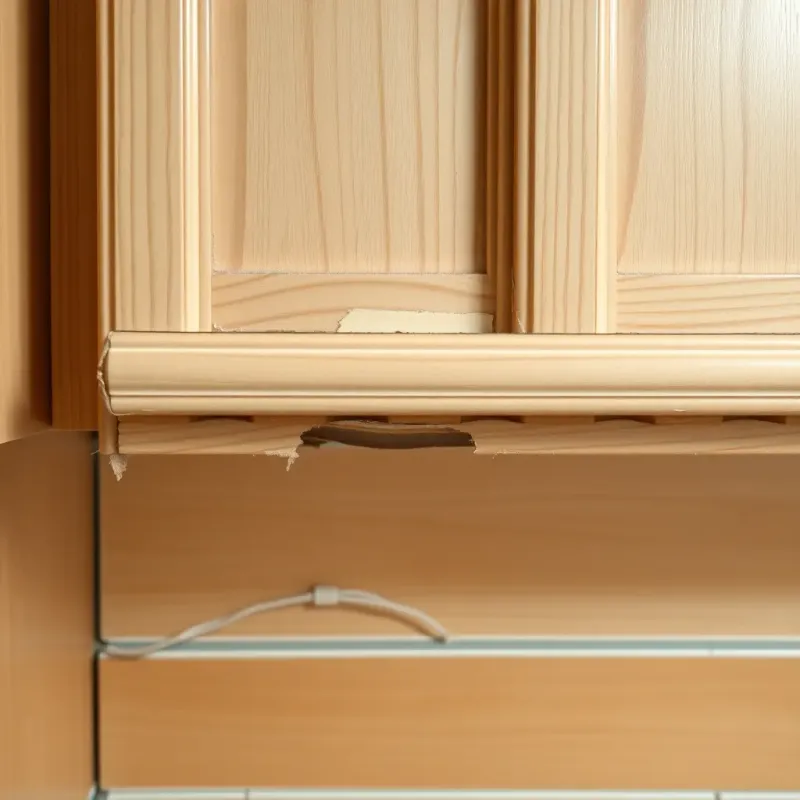
Surface-level water damage occurs when water sits on the cabinet surface for a short period. This typically causes discoloration, minor swelling of veneer, and soft spots in the finish. Surface damage is usually the easiest to repair and often responds well to refinishing.
Deep water damage penetrates the cabinet structure, causing the wood or composite materials to absorb moisture. This leads to significant swelling, warping, and weakening of the cabinet structure. Deep damage may affect the cabinet frame, shelving, and structural integrity.
Veneer separation happens when water penetrates beneath the veneer layer, causing it to bubble, peel, or separate from the substrate. This is particularly common in cabinets made with plywood or MDF cores.
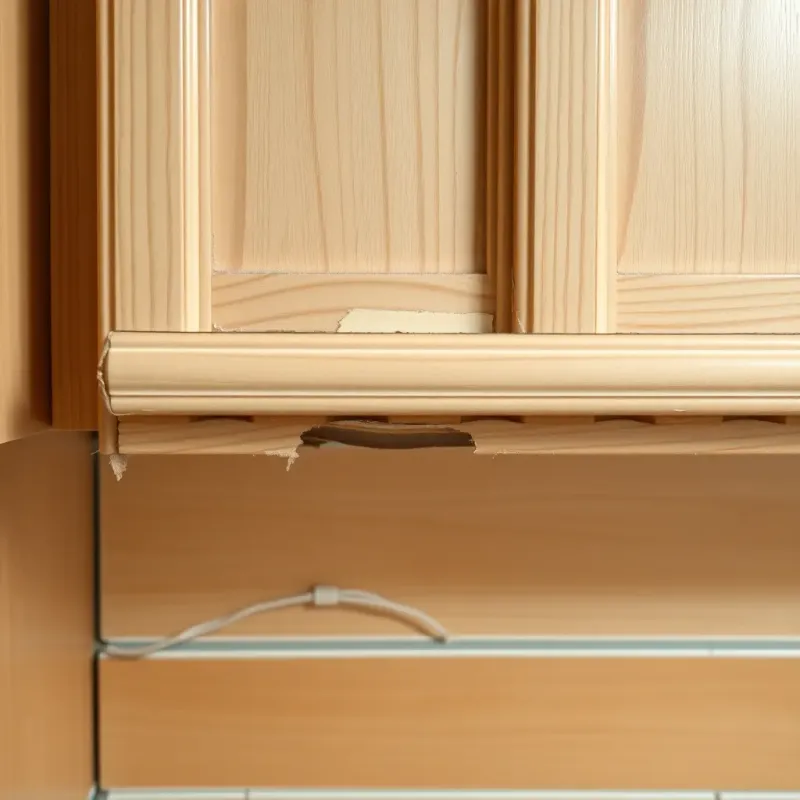
Frame and structural damage is the most serious type, affecting the actual wood frame of the cabinet. Water can cause rot, especially in areas with poor ventilation or prolonged exposure.
Why Kitchen Cabinets Are Vulnerable
Kitchen cabinets face unique water exposure risks. They’re positioned near sinks, dishwashers, and refrigerators—all common sources of leaks. The base of cabinets is particularly vulnerable because water often pools in these lower areas. Additionally, kitchen cabinets typically aren’t waterproofed like bathroom cabinetry, making them more susceptible to moisture damage.
Assessing Your Water Damaged Cabinets
Before deciding whether to repair or replace, you need a thorough assessment of the damage.
Step-by-Step Assessment Process
Inspect the exterior by looking for visible signs of damage including discoloration, warping, swelling, or peeling veneer. Press gently on the cabinet surface—soft or spongy areas indicate water has penetrated deeply.
Check the interior by opening cabinet doors and inspecting shelves, the back panel, and any visible supports. Musty odors are a red flag for mold or mildew growth. Look for any visible mold growth, which indicates prolonged moisture exposure.
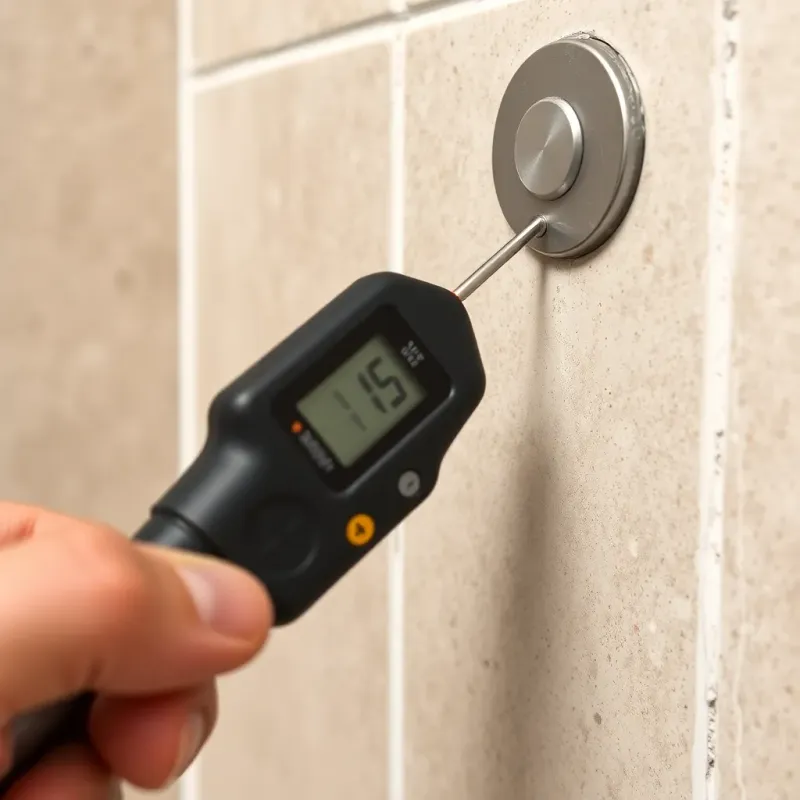
Test with a moisture meter if available. These inexpensive tools measure moisture content in wood. Readings above 15% indicate the wood is absorbing moisture and may be at risk for mold and structural problems.
Inspect hardware and hinges to see if rust or corrosion has developed, which indicates significant water exposure.
Examine under-cabinet areas where water typically collects. Check for water stains, soft spots, or rot at the base where the cabinet meets the floor.
Determining Repairability
Cabinets are generally repairable if damage is limited to the surface or veneer, the structural frame remains sound, and mold hasn’t become established. If damage is extensive, structural integrity is compromised, or mold is present throughout, replacement is often the more economical choice.
Repair Techniques by Cabinet Material
Solid Wood Cabinets
Solid wood cabinets are often repairable because the material can be sanded, refinished, and refinished to look like new. Start by allowing the wood to dry completely (this may take several weeks). Once dry, use 80-120 grit sandpaper to remove warped or damaged surface layers. If the wood has developed a wavy surface, you may need a cabinet maker to carefully plane the surface flat.
After sanding, assess the color. If only the top layer was affected, the wood underneath may be its original color. If staining is deep, you may need to refinish the entire cabinet to match.
Plywood Cabinets
Plywood is more challenging to repair because the veneer often separates from the core when exposed to water. If veneer is bubbling, you can sometimes inject wood glue and clamp it back down. For small separated areas, use a syringe to inject waterproof wood glue under the veneer, then clamp overnight.
If veneer is severely damaged or can’t be reglued, you may need to replace the veneer entirely or accept a more visible repair using wood filler and careful finishing.
MDF and Composite Cabinets
MDF and composite materials are least repairable because they break down irreversibly when saturated with water. Once MDF swells significantly, it doesn’t return to its original shape. These cabinets are often better candidates for replacement than repair.
Small areas of MDF damage can sometimes be addressed with epoxy wood filler, but extensive damage typically requires cabinet replacement.
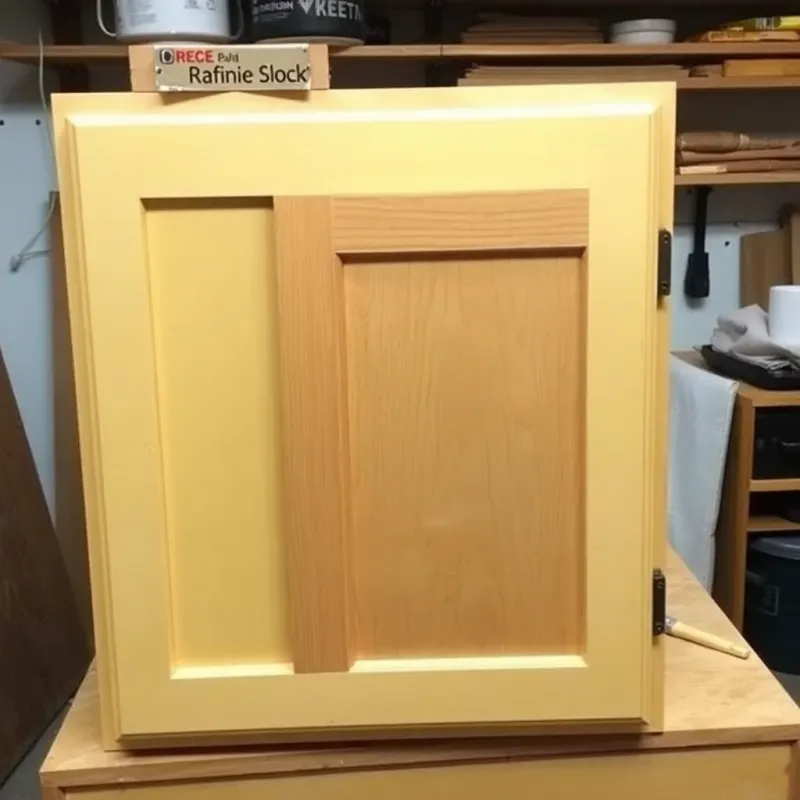
Refinishing Your Repaired Cabinets
Once the water-damaged sections have been repaired and the wood is completely dry, refinishing is your next step.
Preparation and Sanding
Sand all damaged areas and the surrounding cabinet surface to ensure color uniformity. Use progressively finer grits: start with 80-120 grit for removing damage, progress to 150-180 grit for smoothing, and finish with 220 grit for a fine surface. Always sand with the grain to avoid visible scratches.
Remove all dust with a tack cloth before moving to the finishing stage.
Staining and Finishing
If you’re matching existing stain, bring a cabinet sample to a paint or hardware store and test stain colors on scrap wood from the same cabinet or similar material. Most cabinet repairs show at least some color variation, but good staining technique minimizes this.
Apply stain with a brush or cloth, following the wood grain. Let it dry completely between coats. For best results, apply at least two coats of stain.
After staining, apply a protective finish. Polyurethane is the most durable option for kitchen cabinets, providing water resistance and durability. Apply at least two coats, sanding lightly between coats with 220-grit sandpaper.
Achieving a Professional Finish
For seamless repairs, consider a skim coat of spackling compound on any remaining surface irregularities before staining. This creates a smooth, even surface that accepts stain uniformly.
If matching the existing finish exactly is proving difficult, consider refinishing the entire cabinet exterior. This is more work but guarantees color uniformity across all cabinets.
When to Replace Water Damaged Cabinets
Replacement is the better choice when:
- Structural integrity is compromised: The cabinet frame is warped, cracked, or weakened significantly
- Extensive mold growth is present: Mold throughout the cabinet structure indicates prolonged moisture exposure and poses health risks
- Water damage affects multiple cabinets: If several cabinets are damaged, the cost and labor to repair each individually may exceed replacement costs
- The cabinet material breaks down: MDF or composite materials that have swollen significantly won’t return to shape
- Damage is cosmetically severe: If visible damage is extensive and noticeable even after repair, replacement provides better aesthetics
Modern replacement cabinets can be installed quickly, and the labor cost might be comparable to extensive repairs on multiple cabinets.
Preventing Future Cabinet Water Damage
Installation and Sealing
Properly seal the bottom edges of cabinets where they meet the floor or countertop. Silicone caulk creates a water-resistant seal. If cabinets sit directly on a tile floor, ensure grout around the base is sealed.
Appliance Maintenance
Regularly inspect under-sink plumbing for drips or slow leaks before they cause significant damage. Check dishwasher and refrigerator water lines monthly, and learn how to prevent washing machine water damage from nearby appliances. Replace any worn hoses or connections that show signs of degradation. Pro tip: Place a small tray or shallow container under your sink’s P-trap and supply connections. It costs a few dollars but catches slow drips before they soak into the cabinet base, and it serves as an early warning system that something needs attention.
Ventilation
Ensure adequate ventilation in your kitchen to minimize humidity. Use exhaust fans while cooking and during dishwashing cycles. Proper air circulation allows any minor water exposure to dry quickly rather than penetrating wood materials.
Quick Response to Leaks
The key to minimizing cabinet damage is responding quickly to water sources. If you discover a leak, turn off the water immediately, address the source, and dry all affected surfaces thoroughly. The longer water sits on your cabinets, the deeper it penetrates and the more damage occurs.
FAQ: Water Damaged Kitchen Cabinets
Q: How long does it take for water damage to become permanent in kitchen cabinets?
A: This depends on the cabinet material and ambient humidity. Solid wood can begin showing irreversible damage within 48-72 hours of continuous moisture exposure. MDF and composite materials deteriorate faster, often within 24-48 hours. However, if water is removed and the cabinets dry completely within a few hours, permanent damage may be minimized.
Q: Can I use a hair dryer to dry water-damaged cabinets?
A: A hair dryer can help remove surface moisture, but it won’t adequately dry the interior of cabinet structures. Opening cabinet doors and increasing air circulation with fans is more effective. For deep water damage, professional dehumidifiers may be necessary to reach acceptable moisture levels.
Q: Is mold in kitchen cabinets a health hazard?
A: Yes, mold in cabinets poses respiratory health risks and can spread to other areas of your home. If you discover active mold growth (green, black, or white fuzzy substance) inside cabinets, cleaning with mold-killing solution is necessary. Follow our mold prevention guide after water damage for best practices. However, if mold is extensive, professional remediation may be required. Storing food in cabinets with mold is not safe.
Q: How much does it cost to repair vs. replace water-damaged kitchen cabinets?
A: Basic repairs like refinishing cost $200-500 per cabinet. More extensive repairs involving veneer replacement or structural fixes run $500-1,500 per cabinet. Cabinet replacement costs $1,000-3,000 per cabinet depending on material and quality. If more than 25% of your cabinets are damaged, replacement often costs less than repairing individual units.
Q: Can water-damaged cabinets be salvaged if they’ve been wet for weeks?
A: Cabinets saturated for extended periods are unlikely to be salvageable, particularly if mold has developed or the material has begun to deteriorate. However, even in these cases, assessment by a professional restoration company can determine if targeted repairs are possible. Generally, cabinets soaked for more than two weeks should be professionally evaluated before attempting repairs.
Conclusion
Water damaged kitchen cabinets don’t always mean a complete kitchen renovation. Minor surface damage and even moderate structural issues can often be repaired professionally, saving you thousands in replacement costs. The key is responding quickly to water sources, assessing damage thoroughly, and choosing the appropriate repair technique for your specific cabinet material.
By understanding the types of damage your cabinets can sustain and implementing preventive measures, you can protect this significant investment in your home. When damage does occur, knowing whether to repair or replace ensures you make the most economically and practically sound decision for your kitchen.
For extensive water damage or if you’re uncertain about the extent of the damage, consulting with a professional water damage restoration company ensures your cabinets are properly assessed and restored using industry best practices. Review our water damage restoration cost guide for typical pricing.
Disclaimer: This article is for informational purposes only and does not constitute professional advice. Every water damage situation is unique. Always consult a licensed contractor or restoration professional for your specific situation. If you’re dealing with an emergency, contact your local restoration company immediately.